30/06
too hot to handle

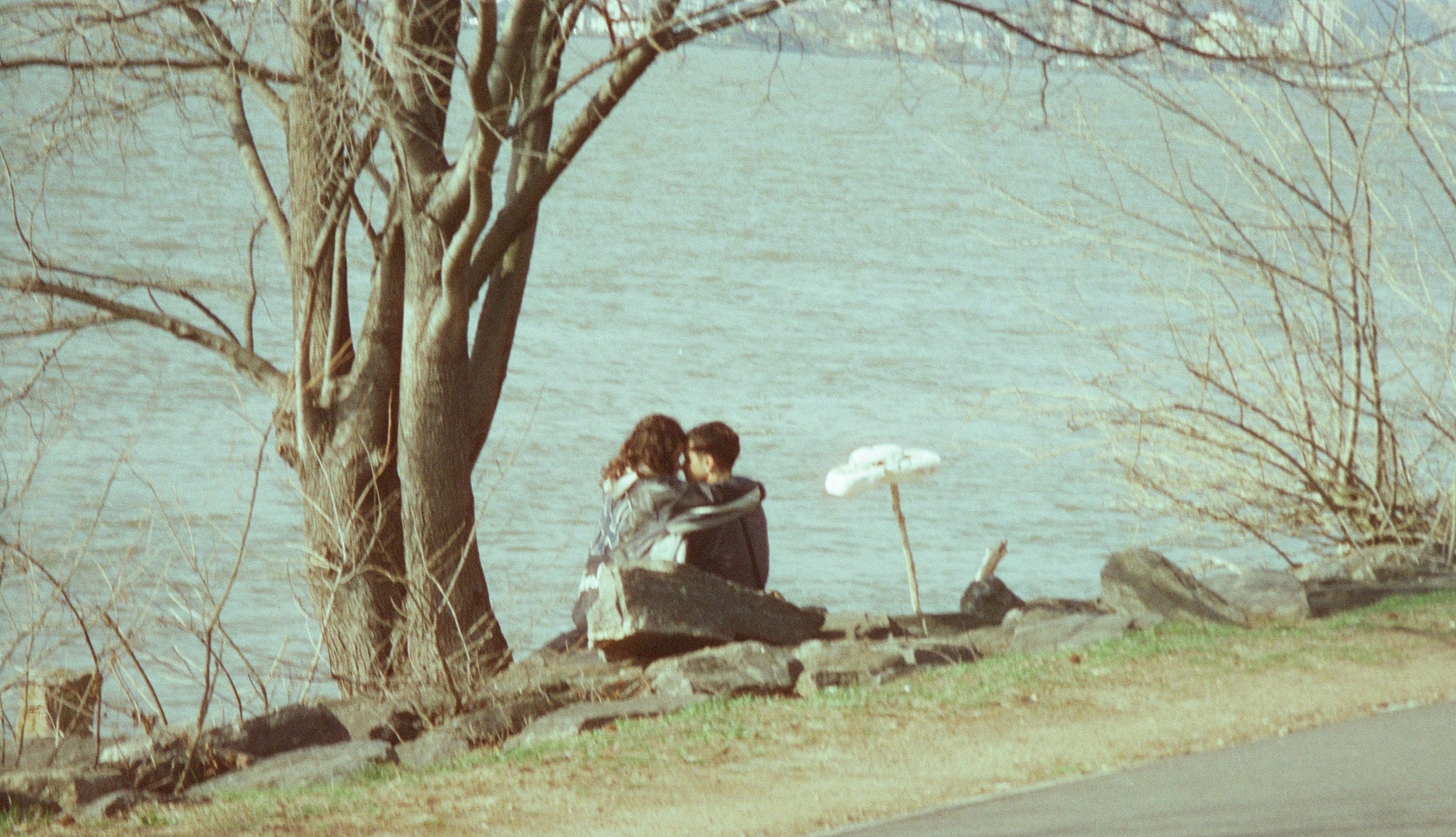
I woke up thinking of Rome or rather that I was physically in Rome. Likely an amalgamation of the sweltering New York City heat wave (what’s up with the UV index?), uniforms of little shorts and cotton tops, unbearable allergies, and subsistence on cool, pickled delicacies from glass jars. I dream of strawberries and cream by the River Thames, picking mulberries adjacent to the house boats. I spend most of my time lying under trees in Riverside Park, hopelessly reliant on the Hudson’s breeze, infusing life and hope of a brighter future.
The days are longer; the streets still full into the late evening. Any excuse for reprieve from a stuffy city dwelling. The unabashed, shameless hedonism emerging during the warmer months is what I’ve always loved about New York. In Rome, the sun’s all consuming orange gradient blinds its inhabitants, obscuring any vision of seasonal eroticism. Forcing its populus inside their tightly shuttered flats with cool tiled floors; emptying buckets of AC water into a tub every few hours. Unthinkable that a New Yorker would ever spending a warmer month cooped up inside. We let it all out, feral animals hungry for consumption, for prey.
Feral, I am not. Rather, an iteration existing between Pedro Almodovar’s A Woman on the Verge of a Nervous Breakdown and the “meek little wives feel[ing] the edge of the carving knife and study[ing] their husbands’ necks” in Joan Didion’s The Santa Ana’s. As the air thickens, restricting a free flow of breath passages, I feel my anxiety levels rising. I suck, in panic, on my inhaler, my latest accruement and security blanket against rising temperatures. Don’t be over dramatic a voice says, this is nothing yet, the worst has yet to come; it’s only June.
1. L'Étranger (2025) - François Ozon
Ozon puts his magic touch on Albert Camus’ L'Étranger, creating a world of sweltering heat and unexpressed desires. How far can someone be pushed until the inner repression is released? A nod to the classics (La Piscine, Purple Noon), L’Etranger teeters its audience on the edge, morphing us into mere particles absorbed by Mersault’s aura. Black and white, nevertheless, I could taste Mersault’s sweat. We’ve all read Camus’ novel, we know how this story ends; but Ozon somehow slow drips it to us, dangling an allusion of an alternate happier ending.
2. Summer with Monika (1953) - Ingmar Bergman
Perhaps one of my favorite Bergman films, it’s a classic tale of a petulant young girl who flies too close to the sun. Monika loves being loved; her desire for attention insatiable, reckless, and messy. Were we ever so young?
3. If Only by Vigdis Hjorth
Continuing with my latest theme of Scandinavia and women on the edge (what’s the subtext here?), I’ve been prefacing If Only as a “genre I do not typically read”. That is, narratives around women who lose their heads around torrid, presumably toxic, romances. Kid me not, this is not a simple beach read. Hjorth’s Proustian stream of consciousness run on sentences construct an intimate, raw view on the emotional fluctuations of love. The chaos that ensues when you submit yourself to pleasure and pleasure only.
4. El Encuentro (2020) - Amaia, Alizzz
After seeing Amaia perform Volver, setting the mood at Almodovar’s afterparty for Bitter Christmas at Cannes, she has quickly filled the ears of my summer soundtrack. It helped that I was tasked with curating the playlist for a recent roadtrip from Madrid to San Sebastián; one can only listen to The Ketchup Song so many times. Everything about Amaia feels quintessentially Spanish - nostalgic, sporty-alluring, 2000s aesthetic. Highly recommend pairing with gildas and tinto de verano.
5. Suzaki Paradise by Yoshiko Shibaki
I first came across Yoshiko Shibaki’s work at a film screening of Suzaki Paradise: Red Light District, the film adaptation directed by Yūzō Kawashima based on Shibaki’s short story. In vein of several Japanese films from the 1950’s, the film itself was a bit on the nose and the direction wasn’t particularly compelling but the short story collection itself is a remarkable peak inside a very specific world in Japan. The stories flow into the other, all set in 1955 (the year before the enactment of anti-prostitution laws) around Bar Chigusa, precariously located at the edge of a bridge leading to the red light district. “I’m telling you, cross that bridge and you’re finished. A place like that is where women’s lives come to an end.”